

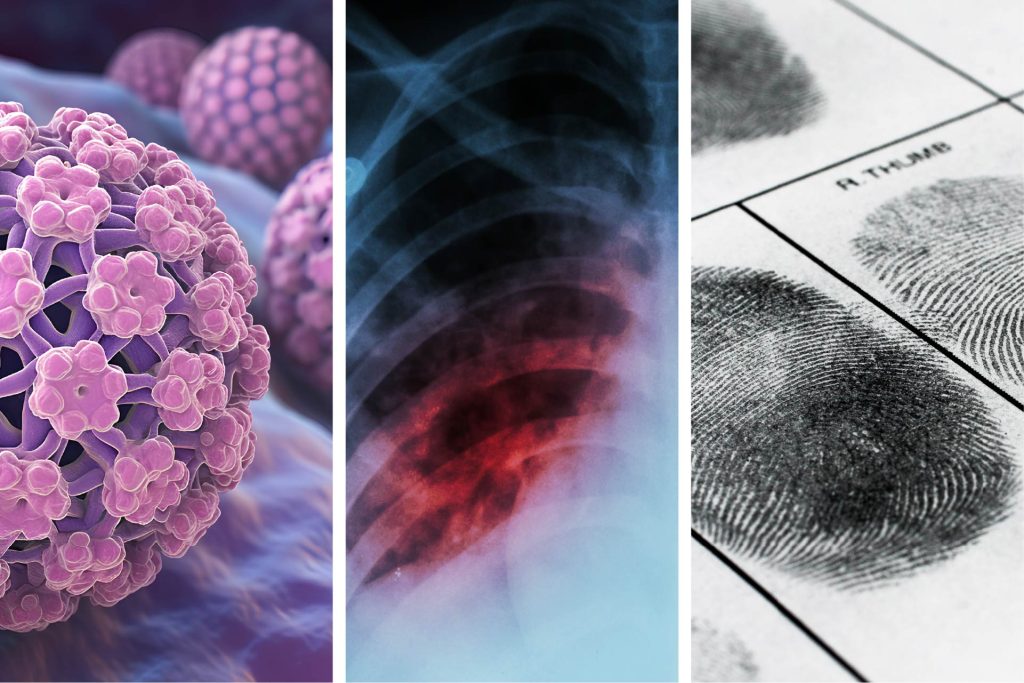
In this issue of Microbiology Time, we selected three engaging papers spanning from HPV self-collection and cervical cancer screening to tongue swabbing for tuberculosis molecular diagnostics, and fingerprint DNA extraction for forensic investigations.
A review of HPV self-collection efficacy
The first study selected this month highlights the efficacy of testing for high-risk HPV, which proved superior to cytology for cervical cancer screening. The method identifies more high-grade precancerous lesions, offers a higher negative predictive value, and reduces the number of lifetime screenings required. Consequently, both the US Preventive Services Task Force and the WHO recommend high-risk HPV testing as the preferred method for screening. Taking a laboratory-centered perspective, the review examines HPV primary screening with attention to specimen types and collection methods, focusing on self-collected vaginal swabs stored dry during transport. The findings suggest that clinical laboratories should collaborate with institutional and clinical leaders to validate and promote vaginal self-sampling as a reliable and convenient option for cervical cancer screening.
Non-invasive collection methods to fight tuberculosis
Swab-based tuberculosis molecular diagnostics is emerging as an accessible and cost-effective tool for tuberculosis (TB) detection. In this multi-country study, Amy Steadman and colleagues evaluated the diagnostic accuracy of two TB molecular diagnostic methods across outpatient clinics in India, Uganda, and Vietnam. Participants aged 12 years and older with presumptive TB provided tongue and sputum swabs, which were compared against a sputum liquid culture reference standard. The study also evaluated performance relative to sputum Xpert MTB/RIF Ultra (Xpert) and sputum smear microscopy. Both molecular swab TB test methods demonstrated sensitivities significantly higher than sputum smear microscopy and aligned with sputum Xpert results. Specificities exceeded 98% for all tests. The findings indicate that the proposed molecular methods surpass the World Health Organization’s minimum accuracy standards for near-point-of-care TB diagnostics. These results highlight their potential to advance universal access to molecular TB testing.
Forensic investigations: ensuring every DNA trace counts
The third study featured in this month’s microbiology review compared the effectiveness of forensic flocked swabs and standard cotton swabs in collecting human and microbial DNA from fingers and fingerprint traces. Firstly, the US researchers demonstrated that microbial DNA recovery was highest from fingers and lower from fingerprints, indicating some DNA loss during contact transfer; the total DNA obtained from fingerprints was about 57% of that from fingers, with both swab types showing similar patterns – although the flocked swabs consistently yielded more DNA. Overall, flocked swabs provided better forensic DNA extraction performance than cotton swabs, as confirmed by short tandem repeat (STR) profiling using direct PCR, with successful STR identification in 74% of finger samples and 40% of fingerprint samples, compared to 54% and 40% for cotton swabs. These findings underscore the importance of selecting the most effective swabbing tools to enhance DNA recovery from skin and latent fingerprints, with significant implications for both forensic and clinical sample collection.
Join CoScience HUB
Create your CoScience HUB account now to access cutting-edge science and position yourself at the forefront of innovation.
Sign Up Now


