







Antimicrobial resistance


The rise of MultiDrug-Resistant Organisms has become a global health and economic concern, and tools to combat them are urgently needed.

Home / Antimicrobial resistance

Antimicrobial resistance: one of the greatest threats to global health

Antimicrobial resistance (AMR) is one of the most urgent threats to global public health, affecting patients, clinicians, researchers, pharmaceutical companies, and policymakers. According to the WHO, AMR already causes more than 1.27 million deaths directly each year, with projections estimating up to 10 million deaths annually by 2050 if no action is taken. The rise of Multidrug-Resistant Organisms (MDROs) is outpacing the development of new antimicrobial agents, and this creates a critical gap between the rate of resistance and available countermeasures. This gap makes early, accurate AMR diagnostics, robust antimicrobial stewardship programs, and coordinated global surveillance essential. Addressing antimicrobial resistance fits within the One Health approach narrative, which integrates human medicine, veterinary science, agriculture, and environmental monitoring. Without cross-sector collaboration and investment in rapid diagnostics and surveillance infrastructure, the clinical and economic burden of AMR will continue to grow across healthcare systems worldwide.

The AMR series:
from global crisis to clinical action

Antimicrobial resistance doesn’t have a single face. It shows up in a screening swab, a blood culture drawn at 3am, and a gonorrhea case that stops responding to treatment. This series moves through the full clinical spectrum of AMR, from the science behind resistance to the infections where it hits hardest. Six chapters, one focus: the better you understand AMR, the better equipped you are to act on it.

Chapter 0

Understanding Antimicrobial Resistance

To launch the scientific content series dedicated to Antimicrobial Resistance, we interviewed one of the most prominent scientists on the topic. Rafael Cantón – a scientist who has spent decades at the intersection of resistance mechanisms, clinical practice, and international policy – explains why AMR is the key health threat of this century and outlines the pillars for fighting it.

Chapter 1 - COMING SOON!

The challenge of superbug screening

This chapter will address the need to translate the global AMR conversation into decisions about screening protocols, sample handling, and detection workflows. We’ll answer questions such as “Which organisms qualify as superbugs?” “Why do they spread so efficiently in clinical settings?” “What does an efficient, systematic screening look like?” with a focus on early detection and what it requires from the lab.

Chapter 2 - COMING SOON!

The unknown threat: surveillance for emerging resistant pathogens

The organisms on the WHO priority list today were not on anyone’s radar twenty years ago. This chapter will cover how these emerging resistant pathogens are identified, what makes them particularly dangerous (novel resistance mechanisms, cross-species transmission, tolerance to standard decontamination), and what a functioning surveillance system needs to intercept them early.

Chapter 3 - COMING SOON!

The quiet epidemic of drug-resistant STIs

Resistant STIs are already occurring in every setting where they are diagnosed and treated: Gonorrhea is running out of treatment options, Mycoplasma genitalium has developed resistance so rapidly that several first-line antibiotics are already failing in routine clinical practice. Discover in this chapter how AMR has changed the clinical management of sexually transmitted infections and what accurate, timely pathogen identification means for patient outcomes.

Chapter 4 - COMING SOON!

Untreatable UTIs: the clinical practice of resistant urinary pathogens

Urinary tract infections are the most commonly diagnosed bacterial infection worldwide and one of the fastest-growing drivers of antibiotic resistance. The fourth chapter of the AMR series focuses on what resistant UTIs look like clinically, covering the risk of untreated or mistreated infections and the diagnostic standards that distinguish accurate results from contaminated samples and missed diagnoses.

Chapter 5 - COMING SOON!

Antimicrobial resistance in bloodstream infections and sepsis

The final chapter of the AMR series addresses one of the hardest challenges in AMR: resistant organisms that infect the bloodstream, where treatment failure is not a prescribing inconvenience but a clinical emergency. Here, we’ll discuss the microbiology of these pathogens, the evidence on time to adequate therapy and outcomes, and what rapid, accurate blood culture diagnostics require from the lab to change clinical decisions in time.

What is antimicrobial resistance?

Antimicrobial resistance occurs when microorganisms – bacteria, viruses, fungi, and parasites – develop the ability to survive exposure to drugs designed to kill them. Antibiotics, antivirals, antifungals, and antiparasitics lose effectiveness when the organisms they target acquire resistance mechanisms: this means infections that were once straightforward to treat may require alternative drugs, longer treatment courses, or more intensive clinical management. AMR is a natural biological process, but its development is accelerated by the overuse and misuse of antimicrobial agents across human medicine, veterinary practice, and agriculture.

Why AMR is a global health threat

Drug-resistant infections already cause more than 1.27 million deaths directly each year, with a broader attributable burden estimated at nearly 5 million deaths annually when accounting for infections where AMR worsened the outcome. The rise of Multidrug-Resistant Organisms – pathogens that no longer respond to multiple drug classes – puts routine medical procedures at risk: surgery, chemotherapy, and organ transplantation all depend on effective antimicrobials. The World Bank Group estimates that AMR could reduce global GDP by up to 3.8% by 2050. That combination of clinical and economic consequences makes AMR a global health threat, not just a microbiological problem.

AMR diagnostics: the role of clinical microbiology laboratories

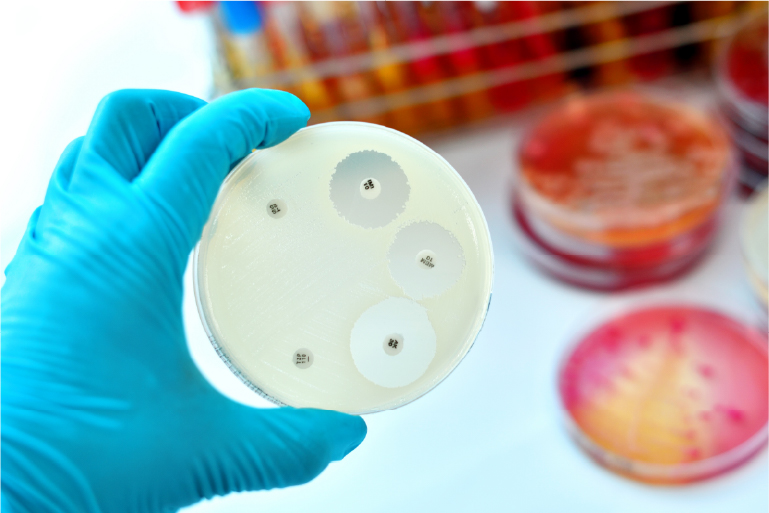
Containing drug-resistant infections depends on identifying the etiologic pathogen and its resistance profile before treatment decisions are made. Antimicrobial susceptibility testing (AST) is a laboratory method that determines which drugs a specific organism responds to, providing clinicians with the data needed to move away from empirical therapy. Beyond individual patient management, the clinical microbiology laboratory plays a central role in AMR surveillance by tracking resistance patterns across populations and healthcare settings. This connects directly to diagnostic stewardship: the appropriate use of diagnostic tools to generate reliable, actionable results that support antimicrobial stewardship programs and reduce drug abuse.

Filters
Sort by:

Loading...