

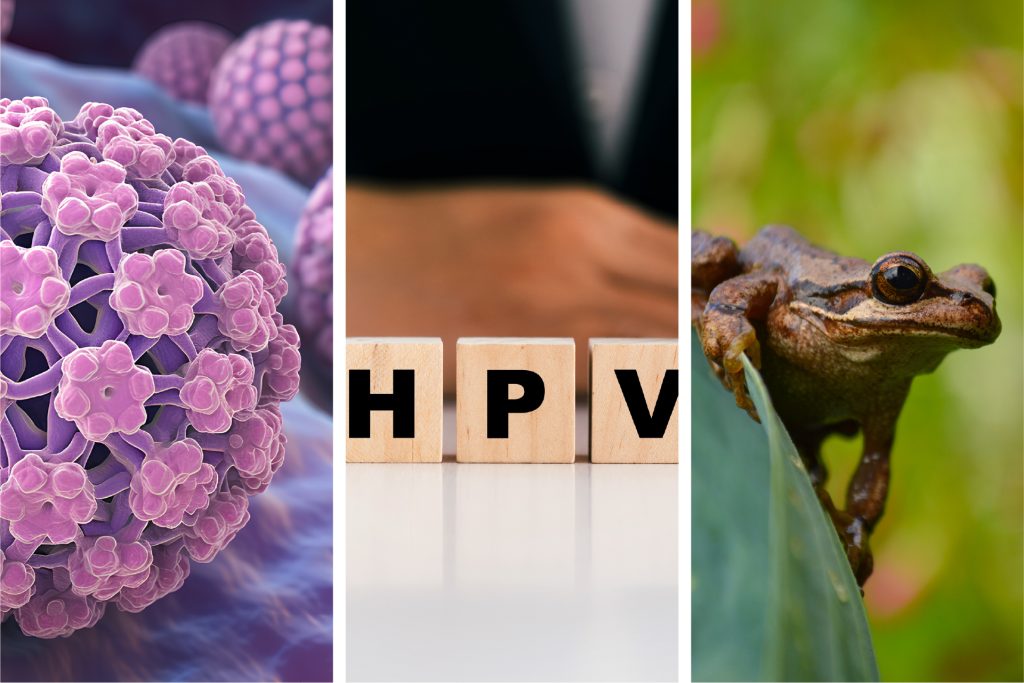
This month, we collected two studies on HPV: one assessing the performance of self-collected samples analyzed on automated platforms, and the other comparing different self-sampling tools. The last study investigates swabbing as a non-invasive alternative for genetic analysis in endangered frogs.
Self-collected vaginal Swabs vs practitioner samples for HPV detection in a colposcopy setting
The recent VALHUDES protocol study, SCoPE2, confirmed that self-collected vaginal swabs perform as well as practitioner-collected cervical samples in detecting high-grade cervical disease. The Australian researchers tested 400 women referred for colposcopy through the nation’s HPV-based screening program, comparing self-collected specimens with clinician-collected samples using both the Roche cobas 4800 and cobas HPV assays. Results showed that relative sensitivity for CIN2+ met VALHUDES non-inferiority benchmarks on both platforms. Specificity was lower for self-collection in the unadjusted analysis, but the adjusted figures met the required threshold. HPV genotype concordance between methods exceeded 80%. These findings support dry vaginal self-collection as a clinically validated, non-toxic, and easier-to-transport alternative for HPV screening, with implications for expanding screening access and improving participation in cervical cancer elimination programs.
HaSCo Trial: head-to-head comparison of three hPV self-sampling devices
The second article is a randomized sub-study of the German HaSCo trial that compared three HPV self-sampling tools (Evalyn-Brush, FLOQSwabs, and first-void urine collection via Colli-Pee) among almost 20,000 women aged 30–65 in Hannover who were overdue for screening. Return rates favored Colli-Pee and FLOQSwabs over Evalyn-Brush, with FLOQSwabs showing the strongest uptake among underscreened women. Sample quality exceeded 98% across all devices. HPV positivity ranged from 6.8% to 8.6% by device, with 145 previously undetected high-risk HPV infections identified overall. Colli-Pee was rated the easiest and most preferred, and 66.7% of participants favored self-testing over clinician-collected sampling. These findings support integrating any of the three validated self-collection devices into national cervical screening programs to boost participation, particularly among historically underscreened populations.
Buccal swabbing as a minimally invasive DNA sampling for endangered frogs
Lastly, a New Zealand study shows that buccal swabbing with FLOQSwabs is an effective, minimally invasive alternative to toe-clipping for genetic sampling of native Leiopelma frogs, including Hamilton’s frog and Hochstetter’s frog. Researchers swabbed 49 frogs and found that DNA yield depended primarily on swab order rather than species, body size, or condition, with the second swab yielding more than twice as much DNA as the first. Buccal swabs and toe-clips were collected for genotyping-by-sequencing (GBS), and there were no significant differences in the number of variable sites or missing SNPs. However, long-range PCR of the mitogenome succeeded in only 7 of 20 samples, indicating some DNA fragmentation. These findings support buccal swabbing as a standard, welfare-conscious method for population genomic studies of small, threatened amphibians, reserving toe-clipping and euthanasia for cases requiring high-molecular-weight DNA or voucher specimens.
Join CoScience Hub
Create your CoScience Hub account now to access cutting-edge science and position yourself at the forefront of innovation.
Sign Up Now


