

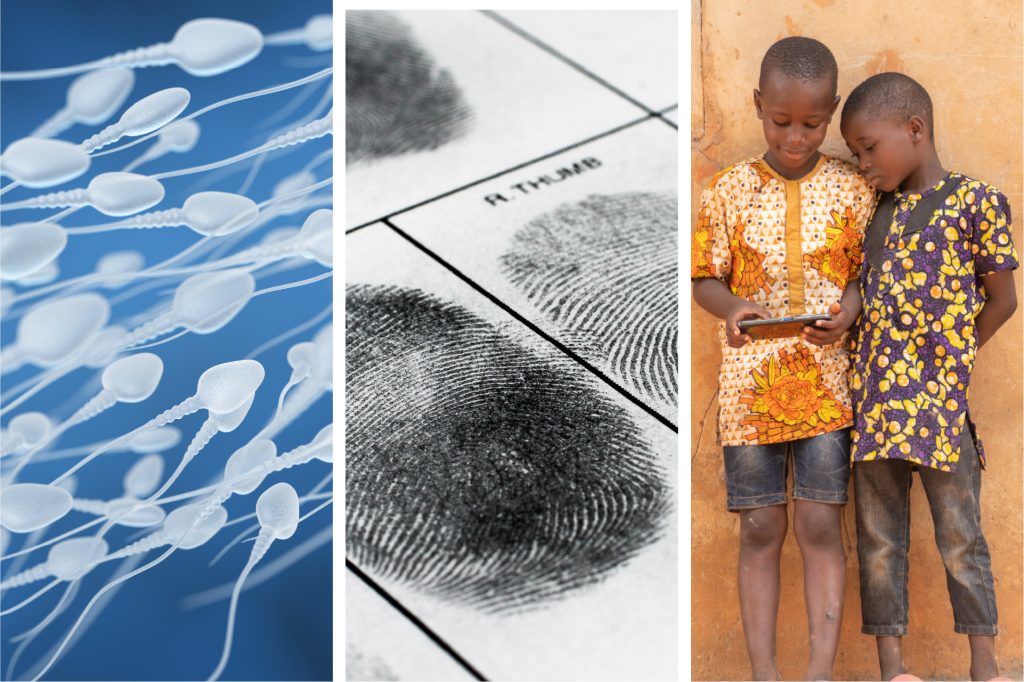
Among the three papers selected this month, two focus on forensic investigations, using flow cytometry for sexual assault investigations and bathwater for human DNA recovery. The third article, a multicountry surveillance study, analyzed the incidence and resistance patterns of Shigella across seven countries.
Transforming sperm cell recovery and sorting for sexual assault investigations
The first study selected this month presents the first validated forensic application of fluorescence-activated cell sorting (FACS) for sperm cell separation, introducing spermFACS as a robust alternative to traditional differential lysis. By combining sperm-specific fluorescent staining with standardized flow cytometry sorting, the method achieves exceptional sensitivity and purity, enabling informative male STR profiles from samples with extremely low sperm concentrations and from vaginal swabs collected up to 120 hours post-intercourse. Compared with differential lysis, spermFACS delivers markedly higher male DNA recovery and improved mixture resolution, particularly in complex scenarios such as delayed reporting or multiple-assailant cases. Importantly, the workflow was validated in accordance with international forensic quality standards and achieved ISO/IEC 17025 accreditation, supporting its readiness for routine casework. Overall, the study demonstrates how targeted single-cell technologies can overcome longstanding limitations of conventional methods, offering a major advance in the forensic analysis of sexual assault evidence.
Bathwater as a source of genetic evidence
We continue our discussion of forensic investigations in the second paper, published in PLOS One. Here, the Japanese researchers explored the forensic value of bathwater as a DNA source, addressing an often‑overlooked substrate in drowning and immersion cases. Using a filtration‑based recovery method followed by STR analysis, the study shows that human DNA can be reliably recovered from bathwater, with both DNA quantity and integrity increasing as immersion duration lengthens. Controlled volunteer experiments revealed substantial interindividual variation in DNA shedding, while mixed profiles frequently reflected residual DNA from previous bath users. In forensic autopsy cases, usable STR profiles were consistently obtained from indoor bathtub drownings, whereas outdoor water sources rarely produced interpretable results due to environmental degradation. Concluding, this paper suggests the use of bathwater DNA to support victim identification and assessments of co-presence; however, this requires cautious interpretation given background DNA and temporal uncertainty.
Shigella-attributable diarrhea – worldwide impact and antibiotic resistance in children
Finally, this multicountry surveillance study, published in The Lancet Global Health, provides the most up-to-date assessment of Shigella-attributable diarrhea in children aged 6–35 months across seven low- and middle-income countries. By integrating culture-based diagnostics with quantitative PCR, the authors demonstrate that Shigella infections are substantially more prevalent than previously estimated, with Shigella flexneri and Shigella sonnei accounting for the majority of cases. Alarmingly, high levels of antibiotic resistance were observed, particularly in South Asia. The study also shows that disease burden peaks early in life, reinforcing the need for vaccines that provide protection in infancy. Importantly, the identified serotype distribution aligns well with leading quadrivalent vaccine candidates, supporting both their potential impact and the operational readiness of the surveillance sites for vaccine trials. Collectively, the findings provide critical evidence to inform Shigella vaccine policy and global child health strategies.
Join CoScience Hub
Create your CoScience Hub account now to access cutting-edge science and position yourself at the forefront of innovation.
Sign Up Now


