


What is the Nipah virus?
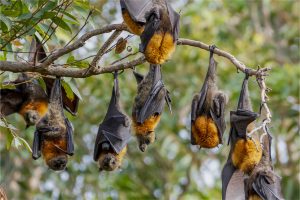
Nipah virus (NiV) is an enveloped, negative-sense, single-stranded RNA virus from the genus Henipavirus. Fruit bats serve as natural reservoirs, and spillover to humans occurs through contaminated food, direct contact with infected animals, or close contact with infected patients. Human-to-human transmission has been observed in South Asia, especially in healthcare settings, highlighting concerns during a Nipah virus outbreak. The severity and Nipah virus fatality rate (around 40–75%) vary between outbreaks, and currently, there are no vaccines or specific antivirals, although some are under development. Outcomes thus depend on early detection, accurate Nipah virus diagnosis, and the provision of supportive critical care.
NiV clinical features
The NiV incubation period typically lasts 4–14 days, and its clinical spectrum ranges from asymptomatic cases to high fever with rapidly progressive encephalitis and severe respiratory symptoms. Initial signs include fever, headache, and myalgia, with rapid progression to altered mental status, seizures, and coma, which indicate Nipah encephalitis. Respiratory symptoms such as cough, dyspnea, and atypical pneumonia or acute respiratory distress syndrome (ARDS) are common during South Asian outbreaks and are linked to increased Nipah virus transmission in healthcare settings. A recent systematic review reported a median case fatality rate of about 70%, and long-term neurological deficits are frequent among survivors of a Nipah virus outbreak.
The West Bengal Nipah virus outbreak
Between late December 2025 and early February 2026, India experienced a new Nipah virus outbreak in West Bengal – the state’s first NiV activity since 2007. Although the number of cases was small, the event was epidemiologically significant because of its hospital-linked transmission, the short time between exposures and symptom onset, and the rapid multi-country public health response. The West Bengal Nipah outbreak activated regional Nipah virus surveillance systems across Asia and renewed global attention on zoonotic spillover risks associated with emerging infectious diseases.
Initial cases among healthcare workers
On January 26, 2026, India reported two laboratory-confirmed Nipah cases to the World Health Organization (WHO), involving nurses aged 20–30 years employed at the same private hospital. Both individuals developed symptoms in late December 2025 and required hospitalization in early January. One patient required mechanical ventilation, while the other experienced severe neurological symptoms followed by gradual improvement. Preliminary investigations suggest that both nurses were likely exposed during routine care of an undiagnosed, severely ill patient who was later identified as the suspected index case. This pattern is consistent with previous Nipah virus outbreaks in India where nosocomial exposure and NiV human-to-human transmission were primary routes of spread.
Contact tracing
Authorities quickly traced between 190 and 196 contacts, including healthcare workers, hospital staff, patients’ relatives, and community contacts. All tested negative for NiV and remained asymptomatic during the entire 21-day monitoring period. This strongly suggested there was no onward Nipah virus transmission, consistent with the WHO’s assessment that the outbreak posed a low national and global risk.
Virological and environmental context
The outbreak occurred during the seasonal window of December–May, which historically corresponds to:
- Increased viral shedding from fruit bats due to breeding-associated physiological stress
- Greater bat foraging toward human food sources, possibly supporting silent spillover events
- Prolonged viral survival in cooler winter conditions
These factors increase the probability of index-case emergence within the region. However, current evidence indicates that no direct animal-to-human transmission was identified in this cluster. Hospital-based transmission from a single, severely ill patient remains the most plausible explanation.
Public‑health measures, international response, and containment
Despite recent media attention, current risks remain low at the national, regional, and global levels. India’s Ministry of Health responded to the Nipah virus outbreak with immediate quarantine of all contacts, expanded Nipah virus surveillance in West Bengal, and reinforced hospital infection control measures. Several Asian countries – including Thailand, Nepal, Malaysia, Singapore, and Taiwan – rapidly intensified arrival screening, airport cleanliness protocols, and temporary quarantine pathways for symptomatic travelers from India. No cases have been detected outside India yet, indicating successful containment. The WHO emphasized that the risk outside West Bengal remained low due to the absence of secondary cases, the absence of symptomatic patient travel, effective public health actions, and the localized nature of the outbreak. Independent experts agreed, noting that Nipah’s requirement for close-range exposure, often in caregiving settings, limits the potential for outbreaks despite its high lethality.
The outbreak from the European Perspective
According to the European Centre for Disease Prevention and Control (ECDC), the current risk of infection for European citizens is considered very low. The ECDC Nipah risk assessment highlights the absence of a natural reservoir in Europe and the limited scale of the West Bengal Nipah virus outbreak. The Indian outbreaks have also involved a small number of cases, with transmission largely limited to healthcare environments. The most plausible route for the virus to reach Europe could be via infected travelers, but the likelihood of this occurring remains low. Despite this overall low risk, several factors warrant increased attention: international travel continues to increase, raising the risk of imported infections. Transmission within healthcare settings remains a possibility, and early diagnosis can be difficult because the initial symptoms are non-specific. From a preparedness perspective, the main concern is early recognition, accurate Nipah virus diagnosis, and prevention of hospital clusters.
Vaccines under development
Global Nipah vaccine development is accelerating. The ChAdOx1 NipahB vaccine is the most advanced candidate, currently in a Phase II clinical trial in Bangladesh following completion of a safe Phase I evaluation in Oxford. Parallel efforts include Japan’s recombinant measles vector vaccine, which will enter Phase I human trials in Belgium in April 2026 following strong protective results in macaques. Both candidates aim to fill an important gap, as no licensed Nipah vaccine exists. Additional platforms, such as viral vector, subunit, and computational multi-epitope designs, are advancing through preclinical development.
Why we should not over-worry today, but should stay prepared
In Recent analyses indicate that containment of the West Bengal Nipah virus outbreak was maintained, that regional airport screening was precautionary, and that there was no sustained NiV human-to-human transmission. The latter cases in West Bengal demonstrate that rapid contact tracing and disciplined prevention and control measures can counter transmission. For clinicians outside active clusters, NiV should remain on the differential for acute encephalitis/atypical ARDS with an exposure history, but the pre‑test probability is low compared with more prevalent etiologies.
Quick‑Reference for Healthcare Facilities
When to Suspect Nipah Virus
Identify and immediately isolate any patient with:
- Acute fever + altered mental status, seizures, severe headache, respiratory distress, or cough, plus epidemiologic link (contact with suspected/confirmed Nipah case, raw date‑palm sap exposure, bat/pig contact, or cluster of encephalitis/ARDS).
- Cases early in the course of illness may present as “flu-like” but can progress rapidly to encephalitis or ARDS.
- Incubation is typically 4–14 days, occasionally up to 45 days.
Immediate Clinical Actions (Triage → Isolation Within Minutes)
- Provide a medical mask to the patient on arrival; minimize movement.
- Direct to designated isolation room (single room, dedicated equipment).
- Activate internal Nipah alert pathway (infection control, clinical lead, lab).
Diagnostic Workflow
Specimen Types
Collect after admission to isolation, using full protective equipment:
- Throat/Nasopharyngeal swab in viral transport media (VTM) like Copan UTM
- Urine (≥10 mL)
- Blood (≥5 mL)
- CSF (1–2 mL) if clinically indicated
Timing
- Samples collected before day 4 may yield false negatives → repeat on or after day 4.
- Obtain paired convalescent serum samples between days 10 and 18.
Laboratory testing
- RT‑PCR for acute confirmation (respiratory samples, urine, CSF) as part of Nipah virus diagnosis.
- IgM/IgG ELISA for acute and convalescent phases.
The importance of viral transport media
For NiV, international guidelines recommend using oropharyngeal or respiratory swabs placed in viral transport media (VTM) like Copan UTM, stored at controlled temperatures, and transported in triple-packaging systems that meet international standards for infectious substances. Proper use of VTM is essential during a Nipah virus outbreak because it preserves viral RNA integrity until analysis, maintains diagnostic sensitivity for PCR testing, reduces the likelihood of false-negative results during early infection, and ensures the safe transport and handling of clinical samples. In public health emergencies or imported cases, standardizing collection and transport procedures is crucial for laboratory preparedness, aligning with WHO guidance on other emerging respiratory viruses, where proper sample management is a key component of biological risk control.
Conclusions
The recent West Bengal Nipah virus outbreak underscores a key concept in emerging infectious disease management: NiV remains a high-consequence pathogen, but not an unmanageable threat. Rapid case recognition, strict infection control practices, coordinated Nipah virus surveillance and international collaboration can successfully contain a virus. Despite its clinical severity and zoonotic unpredictability, the overall risk of widespread transmission remains low, largely because NiV requires close, often prolonged, exposure to spread, typically in caregiving or healthcare settings rather than in the general community.
At the same time, the event is a reminder that preparedness is essential. Vigilant surveillance, clinician awareness, rapid Nipah virus diagnosis, and robust hospital prevention and control infrastructure remain the strongest tools for preventing escalation. The swift multi-country response also demonstrates that regional and international coordination is effective, limiting spillover and providing reassurance to both clinicians and the public. The outbreak is now considered contained, but the lessons remain critical for managing future Nipah virus outbreaks and other emerging infectious diseases.
Bibliography
- https://www.who.int/news-room/fact-sheets/detail/nipah-virus
- Aditi, Shariff M. Nipah virus infection: A review. Epidemiol Infect. 2019 Jan;147:e95.
- https://dhs.kerala.gov.in/wp-content/uploads/2021/09/Nipah-Guidelines-9-04-21-2-1.pdf
- https://www.sciencealert.com/nipah-virus-outbreak-has-asia-on-high-alert-amid-deaths-in-india
- https://www.washingtonpost.com/world/2026/01/27/nipah-virus-outbreak-india/
- https://www.ndtv.com/health/japanese-researchers-to-begin-human-trial-for-nipah-vaccine-in-april-10944905
- https://www.ecdc.europa.eu/sites/default/files/documents/Communicable-disease-threats-report-week-5-2026.pdf
- https://ioplus.nl/en/posts/nipah-virus-this-is-how-far-we-are-with-vaccine-development
Join CoScience HUB
Create your CoScience HUB account now to access cutting-edge science and position yourself at the forefront of innovation.
Sign Up Now


