

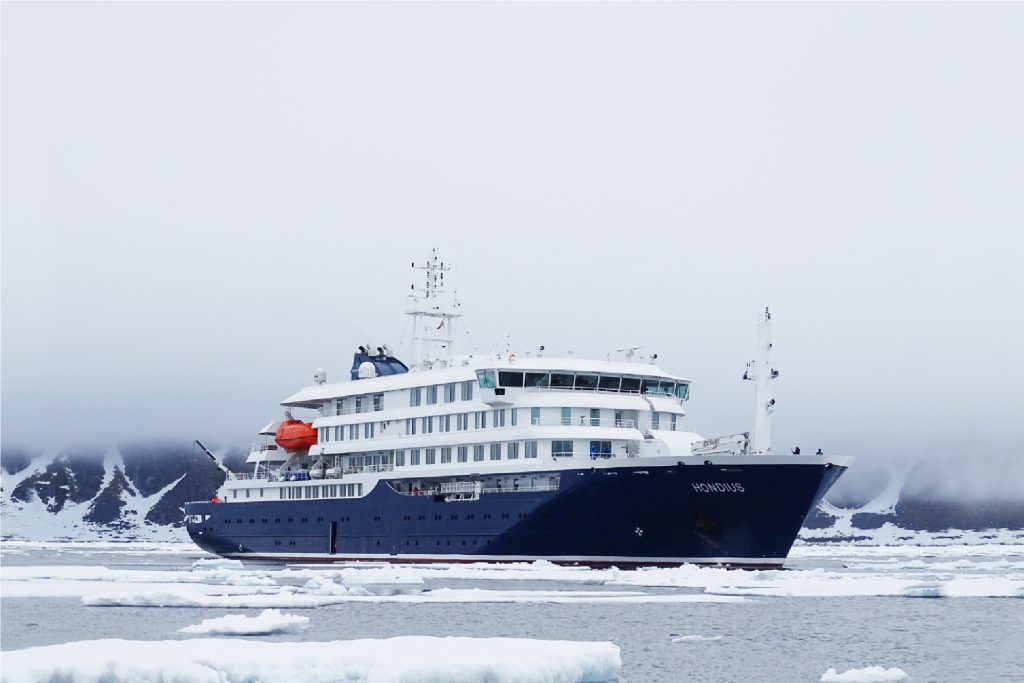
A cluster of hantavirus pulmonary syndrome cases linked to a South Atlantic cruise has brought a rare, person-to-person-transmissible strain of the virus back into the spotlight. In this article, we will discuss the science behind the outbreak and the latest updates.
A hantavirus outbreak at sea: the MV Hondius cluster
Since mid-April 2026, the WHO and several national health authorities have been tracking a hantavirus outbreak linked to a single vessel: the MV Hondius, a cruise ship carrying 147 passengers and crew on an itinerary through Argentina and remote sub-Antarctic territories, including South Georgia and Antarctica.
As of 7 May 2026, eight cases have been reported – five confirmed and three suspected. Three people have died. The vessel is now sailing toward Tenerife in the Canary Islands, where passengers will be transferred directly to repatriation flights rather than released into the local community.
British nationals returning from the ship have been asked to self-isolate for 45 days. Two British passengers are receiving treatment in hospitals in the Netherlands and South Africa following medical evacuation. The WHO has assessed the risk to the general global population as low and stated that this cluster does not mark the beginning of a new pandemic.
What is hantavirus, and how does it spread to humans?
Hantavirus belongs to the genus Orthohantavirus and is a zoonotic pathogen that circulates primarily in animal reservoirs and is transmitted to humans through contact with infected wildlife. The principal hosts are rodents: rats, mice, and voles, which shed the virus in their urine, saliva, and droppings. Human infection most commonly results from inhaling aerosolized particles from contaminated rodent excreta, typically when people disturb enclosed, infested spaces such as rural cabins or storage sheds.
The virus causes two distinct clinical syndromes. Hemorrhagic fever with renal syndrome (HFRS) predominates in Europe and Asia. Hantavirus pulmonary syndrome (HPS), the form documented in the MV Hondius outbreak, occurs in the Americas and targets the lungs rather than the kidneys. HPS mortality rates in the Americas can reach 50 percent in some outbreaks.
The Andes virus: the strain that breaks the rules on human-to-human transmission
Usually, a person who contracts the infection cannot pass it to another person. The Andes virus, first identified in outbreaks in Argentina and Chile, is the documented exception. Epidemiological studies from earlier South American outbreaks established that the Andes strain can spread among people who share prolonged, close contact.
This capacity for human-to-human transmission is why health authorities have taken aggressive containment measures around the MV Hondius. An enclosed ship with shared ventilation and common spaces is not an ideal environment for managing a pathogen that does not require a rodent intermediary to spread. Investigators are working to establish how passengers were initially exposed.
Hantavirus pulmonary syndrome: symptoms, incubation, and clinical course
Early HPS symptoms are nonspecific. Patients typically develop high fever, severe myalgia, fatigue, headache, dizziness, and gastrointestinal disturbance, including nausea, vomiting, or abdominal pain. This prodromal phase is easily confused with influenza, which presents a diagnostic challenge in the field.
Within days, the disease can progress to acute respiratory distress syndrome as fluid accumulates in the lungs, severely compromising breathing. There is no approved cure or licensed vaccine in the EU. Management relies on intensive care support: mechanical ventilation, hemodynamic stabilization, and close monitoring. Survival is largely a function of how quickly a patient reaches an ICU with adequate respiratory support.
One of the more challenging features of hantavirus infection is its incubation period, which ranges from 1 to 6 weeks from exposure to symptom onset. Someone infected during a shore excursion in early April could feel well for nearly a month before becoming ill, by which point they may have already returned home to multiple countries, as the passenger manifest of the MV Hondius reflects.
How to diagnose Hantavirus: laboratory methods and case confirmation
Hantavirus cannot be diagnosed solely on clinical grounds. The early prodrome overlaps too closely with influenza and other respiratory illnesses for a physician to distinguish them. Laboratory confirmation is required in every case, and because symptoms often prompt presentation before a clinician has considered a zoonotic etiology, accurate exposure history is the first diagnostic tool.
Serological testing: ELISA and antibody detection
The primary diagnostic method is the enzyme-linked immunosorbent assay (ELISA) that detects IgM antibodies in serum. This approach works for both HPS and HFRS. Its clinical utility rests on timing: most patients have detectable IgM at or shortly after symptom onset, meaning a blood draw taken at first presentation can yield a positive result without the clinician needing to wait for the infection to mature.
Molecular diagnostics: RT-PCR and strain identification
Reverse transcription polymerase chain reaction (RT-PCR) detects hantavirus RNA directly from blood, tissue, or other clinical samples. It can yield a positive result before antibodies have developed, making it the preferred method on the first day or two of illness, when serological tests may still be negative. RT-PCR also identifies the specific strain involved, a distinction that matters operationally in an outbreak like the MV Hondius cluster, where confirming Andes virus, rather than a non-transmissible strain, directly shapes the isolation and contact-tracing response.
Case definition and reporting criteria
The national case definition in the United States, as maintained by the CDC, requires both a compatible clinical presentation and at least one of the following acute laboratory findings: a positive IgM result, a positive IgG result with demonstrably rising titers across sequential samples, a positive immunohistochemistry result, or a positive PCR. Testing can be performed at the CDC itself, at state laboratories running the CDC-developed ELISA assay, at state public health laboratories using other validated diagnostic platforms, and at commercial reference laboratories. The practical implication for the MV Hondius outbreak is that passengers repatriated to multiple countries will be tested through their respective national laboratory systems, which use different assay formats, thus complicating cross-border case counting and requiring the WHO to act as the coordinating reference point.
The virology of hantavirus and global outbreak preparedness
The MV Hondius case is not the first time the Andes virus has drawn international attention, but it is among the first instances of a hantavirus cluster with documented human-to-human transmission risk in a mobile, multinational context. Previous Andes virus outbreaks were geographically contained to rural communities in Patagonia. The difference here is the vector of dispersal: an international cruise ship whose passengers returned, or planned to return, to a dozen countries.
This case will likely inform how virologists and public health planners think about outbreak scenarios involving pathogens with limited but real human-to-human transmissibility. The Andes virus has been on researchers’ radar for decades, but vaccine development has lagged behind better-funded respiratory pathogens. There are no approved antivirals specifically targeting hantavirus, and clinical management remains supportive.
For now, the WHO risk classification for the general public remains low. That assessment could change if the epidemiological investigation reveals a longer chain of human-to-human transmission than the data currently suggest.
Bibliography
- https://www.ecdc.europa.eu/en/infectious-disease-topics/hantavirus-infection/factsheet-orthohantavirus-infections
- https://www.who.int/emergencies/disease-outbreak-news/item/2026-DON599
- https://www.ecdc.europa.eu/en/publications-data/hantavirus-associated-cluster-illness-cruise-ship-ecdc-assessment-and
- https://edition.cnn.com/2026/05/07/world/hantavirus-ship-tenerife-outbreak-intl
- https://www.bbc.com/news/articles/c98r199e195o
- https://hantavirusreports.com/article/how-to-test-for-hantavirus-diagnostic-methods
Join CoScience Hub
Create your CoScience Hub account now to access cutting-edge science and position yourself at the forefront of innovation.
Sign Up Now


